
Supplements Explained
your medical guide to understand vitamins,minerals and dietary supplement role ,who need them and how to use safely.
A Pharmacist’s Guide to What You Actually Need
Dietary supplementation has become a massive global industry, promising everything from eternal youth to instant energy. However, to truly succeed in your health journey, you must identify your specific nutritional gaps and the primary goals you want to achieve. Understanding the science behind these products helps you filter out the noise and focus on what provides real value. This guide provides pharmacist-approved insights to ensure you make informed choices, avoid wasting money, and protect your long-term well-being.
Effective supplementation starts with high-quality ingredients that match your body's unique biological needs. You should look for products that are bioavailable, meaning your body can actually absorb and use them effectively. Furthermore, optimizing your health involves more than just swallowing a pill; it requires a synergy between your diet, lifestyle, and evidence-based supplementation. This approach helps increase the effectiveness of your regimen and ensures you aren't just creating "expensive urine" by taking things your body cannot process.
Identify Your Needs and Your Body
Start by choosing a health focus that matters to you, whether it is improving bone density, boosting immunity, or enhancing cognitive function. When you define your health priorities, you can build a supplement routine that actually achieves the results you seek. You must determine your needs based on your current diet, blood work results, and the specific lifestyle stressors you face. Additionally, you can follow these strategic steps to enhance your nutritional foundation.
Get a comprehensive blood panel to identify actual deficiencies in Vitamin D, B12, Iron, and Magnesium before starting any high-dose regimen.
Analyze your daily diet to see if you are meeting the Recommended Dietary Allowance (RDA) for essential micronutrients through whole foods first.
Consider your life stage and specific needs, such as prenatal support, athletic recovery, or age-related cognitive health.
Evaluate your gut health; if your digestion is poor, you may need enzymes or probiotics to help absorb the nutrients you are consuming.
Review your current medications with a pharmacist to ensure that no supplements interfere with your prescriptions or cause adverse reactions.
Track your energy levels and symptoms in a journal for 30 days to see if the changes you make are actually producing a noticeable difference.
In short, you should explore all available data regarding your health and work diligently to achieve success in your wellness journey. Continuous adjustment and refinement of your routine will help you maintain a strong and healthy body.
Plan Your Regimen Strategically
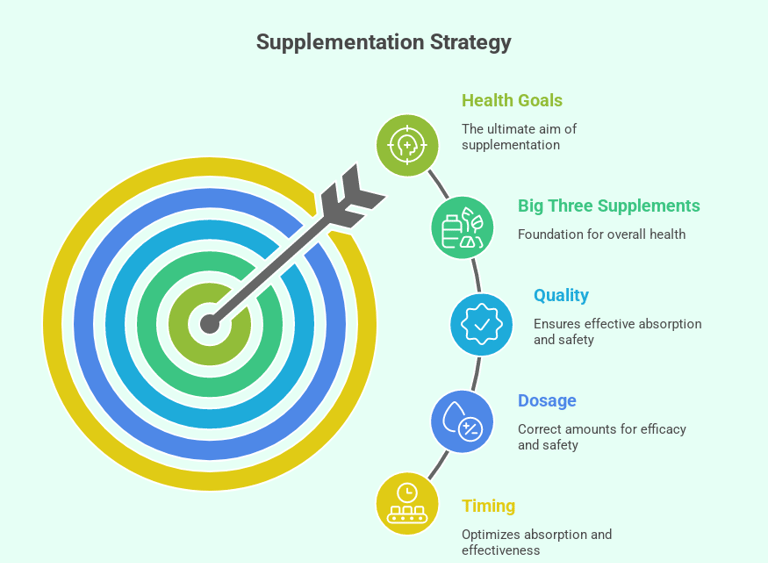
Planning your content in this case, your daily intake is the fundamental element that determines the success of your health strategy. Here are some strategies that can help you achieve the best results in the world of supplementation.
Set Clear Objectives Before buying a bottle, define a clear goal. Are you trying to lower inflammation, improve sleep quality, or support heart health? Your choices should directly reflect these goals.
Understand the Hierarchy Focus on the "Big Three" first: a high-quality multivitamin, Omega-3 fatty acids, and Vitamin D3. These form the foundation before you add niche performance boosters.
Timing Matters Research when to take each supplement. For example, fat-soluble vitamins (A, D, E, K) must be taken with a meal containing fat for proper absorption.
Prioritize Quality Over Price Cheaper supplements often use synthetic fillers or low-quality forms of minerals (like Magnesium Oxide) that have very poor absorption rates.
Verify Dosage Accuracy Ensure the dosage on the label matches clinical studies. Taking too little won't work, but taking too much (especially of minerals like Zinc or Selenium) can be toxic.
Cycle Your Supplements Some herbs and adaptogens, like Ashwagandha or Rhodiola, work best when you cycle them (e.g., 5 days on, 2 days off) to prevent the body from building a tolerance.
Monitor Interactions Be aware of how supplements interact with each other. For example, high doses of Zinc can deplete your Copper levels over time.
Practice Patience Nutritional changes happen at a cellular level. It often takes 3 to 6 months of consistent use to see significant changes in blood markers or physical symptoms.
By considering these strategies and planning your intake carefully, you can increase your chances of success in your health journey and maximize the impact on your target physiological systems.
Focus on Ingredient Quality
Your attention to the quality of the ingredients is a core strategy for achieving success in supplementation. High-quality formulas contribute significantly to attracting positive results and avoiding hidden toxins. Here are some strategies to improve the quality of what you put into your body.
Attention to Detail Review the "Other Ingredients" list carefully to ensure there are no artificial colors (like Red 40), titanium dioxide, or excessive hydrogenated oils.
Use Superior Forms Choose chelated minerals (like Magnesium Bisglycinate) and methylated vitamins (like Methylfolate instead of Folic Acid) for vastly superior absorption.
Clean Sourcing Look for non-GMO, gluten-free, and organic certifications if those align with your dietary values and help reduce your toxic load.
Search for Stability Ensure that delicate oils, such as Fish Oil, are processed using molecular distillation to prevent rancidity and remove heavy metals like mercury.
Third-Party Testing Only buy from brands that use independent labs (like USP, NSF, or ConsumerLab) to verify that what is on the label is actually in the bottle.
Verify Potency Check the expiration date and storage requirements; many probiotics and liquid vitamins lose their potency if not kept in a cool, dark place.
Avoid Proprietary Blends Stay away from products that hide specific dosages behind a "blend" name. You deserve to know exactly how many milligrams of each ingredient you are consuming.
By following these strategies, you can improve the quality of your supplement stack and build a strong reputation for your personal health standards, which contributes to your long-term success in wellness.
Understand Bioavailability and Absorption
Bioavailability is one of the essential factors for the success of any supplement. Thanks to the correct application of absorption strategies, your body can achieve a high level of nutrient utilization, which increases health benefits and positively affects your daily energy. When you optimize for absorption, your regimen becomes more effective for your target goals. When people take supplements without understanding how they work, they often miss out on the intended benefits.
Focusing on bioavailability is not just a technical detail; it is a comprehensive health strategy that helps increase access to the "active" nutrients. By optimizing the delivery system whether it’s a liposomal liquid, a delayed-release capsule, or a sublingual tablet ,you can ensure the nutrients bypass stomach acid if necessary.
You can strengthen your results by pairing nutrients that work together, such as Vitamin D with Vitamin K2 or Iron with Vitamin C. By paying attention to these details, you can increase the efficiency of your routine and build a foundation for sustainable health. Do not ignore this vital aspect of your health strategy; instead, dedicate the necessary time to understand how your body processes these compounds.
In short, no health journey can ignore the importance of bioavailability. If you want to build a reliable and successful health foundation, you must invest in strategies that prioritize how your body absorbs nutrients.
Consult Your Healthcare Provider
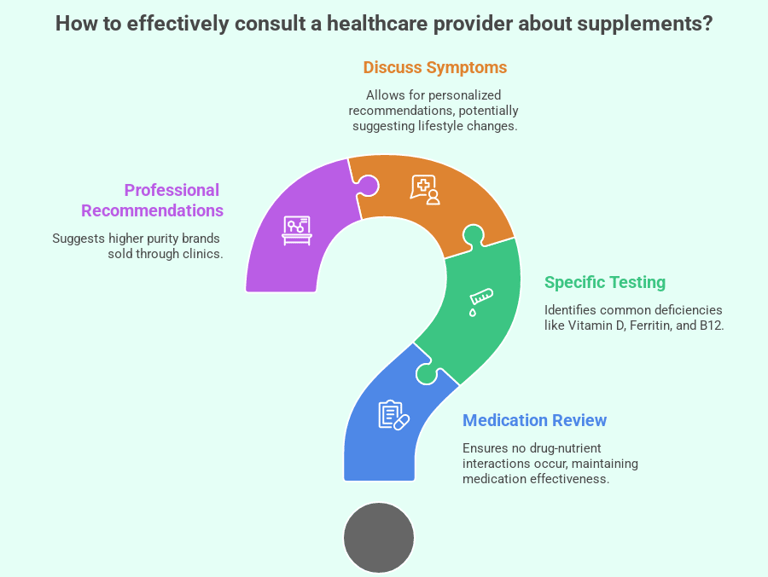
Interaction with a healthcare professional is a decisive factor in your success with supplements. When you build a strong relationship with your doctor or pharmacist and consult them regularly, you can achieve greater results and reduce risks. Here are some effective strategies to follow when consulting a professional.
The Medication Review Always provide a full list of your current prescriptions to check for "Drug-Nutrient Interactions" that could make your medicine less effective.
Ask for Specific Testing Request blood tests for Vitamin D, Ferritin, and B12 specifically, as these are common deficiencies that "general" blood tests might overlook.
Discuss Your Symptoms Be honest about why you want to take a supplement. A pharmacist might suggest a lifestyle change or a different nutrient that is more effective for your specific symptom.
Professional Recommendations Ask for "professional grade" brands that are typically sold through clinics, as these often have higher purity standards than retail brands.
Report Side Effects If you experience nausea, headaches, or skin rashes after starting a new vitamin, consult your provider immediately to determine if the dose is too high.
Integrate with Nutrition Work with a registered dietitian to ensure your supplements are filling gaps rather than replacing a healthy diet.
Through adopting these strategies and interacting effectively with experts, you can build a strong safety net for your health and achieve sustainable success in supplementation.
Evaluate Supplement Brands
In the world of health, connecting with trusted brands can be a crucial strategy for achieving success and enhancing the effectiveness of your routine. Reliable brands are important partners that provide you with the transparency and clinical backing needed to trust what you are consuming. Here is how to evaluate brands effectively:
Research and Analysis Start by researching brands that have a long history of clinical research. Brands that invest in human trials for their specific formulas are generally more trustworthy.
Transparency in Labeling Look for companies that disclose the exact source of their ingredients. For example, knowing if their Omega-3 comes from wild-caught anchovies or farm-raised fish matters.
Manufacturing Standards Ensure the brand follows Current Good Manufacturing Practices (cGMP). This ensures the facility is clean and the processes are standardized to prevent contamination.
Avoid Marketing Hype Be skeptical of brands that use "buzzwords" without substance. If a product claims to be a "miracle cure" or offers "instant weight loss," it is likely a marketing trap.
Customer Support Contact the brand and ask for their "Certificate of Analysis" (CoA) for a specific batch. A transparent brand will provide this document to prove their lab results.
Sustainability Practices Many top-tier brands now focus on sustainable harvesting and eco-friendly packaging, which reflects a higher level of corporate responsibility and ingredient care.
Price Consistency While high quality costs more, extremely inflated prices don't always mean better results. Compare the cost-per-serving of similar high-quality brands to find the best value.
Community Feedback Look at reviews on independent sites (not just the brand's website) to see how other users have reacted to the product over several months of use.
In short, evaluating brands is an effective strategy for achieving success. Through these partnerships, you can ensure your body receives the best possible support, leading to a more credible and impactful health journey.
Stay Informed and Keep Evolving
Your commitment to learning and evolving is essential for success in personal health. Successful supplementation requires staying up-to-date with the latest clinical trials and nutritional breakthroughs. By continuing to learn, you can develop a more sophisticated understanding of how nutrients work together and adapt your routine as your body changes with age.
Invest time in reading reputable medical journals and following registered pharmacists or doctors who specialize in functional medicine. Participate in health webinars and stay connected with the wellness community to exchange experiences and ideas. By evolving your knowledge, you will be able to provide your body with more valuable support and achieve sustainable success in your long-term health goals.
Additionally, staying informed helps you adapt to the rapid changes in the supplement industry. It allows you to use new strategies, such as personalized nutrition based on your DNA (nutrigenomics) or advanced data tracking via wearable devices. Continuous development contributes to strengthening your health status and increasing your influence over your own well-being.
Ultimately, a commitment to continuous learning reflects a real desire for growth and providing the best care for your body, leading to a strong and sustainable relationship with your health for years to come.
Be Patient and Persistent
Patience ad persistence are the keys to success in health and wellness. In a world full of "quick fix" promises, building a truly healthy body requires a thoughtful and consistent strategy. This does not happen overnight; it requires steady work and a long-term perspective.
Consistency in daily dosing.
Waiting for cellular turnover.
Dedicating time to lifestyle changes.
Overcoming the "plateau" phases.
Trusting the biological process.
Persistence during stressful times.
Learning from trial and error.
Remember something very important Success in health is the result of effort and discipline. You might not feel a difference in the first week, but skipping doses or giving up too early is the only way to fail. My advice to you is to master the basics of nutrition before adding complex supplements.
Therefore, do not hesitate to face the challenges and slow progress you may encounter. Remember that persistence is the key to achieving sustainable health and building a life of vitality and wellness in the modern world.
Conclusion In the end, it can be said that the strategies for success in understanding supplements require a delicate balance between various elements. You must be committed to your goals while continuously improving your knowledge of what you consume. You must understand your body’s unique needs and provide it with high-quality, bioavailable fuel.
Additionally, you should adopt effective strategies to monitor your progress through testing and professional consultation. By employing these strategies in a balanced and thoughtful way, you can build a vibrant life and achieve true success in your health and wellness journey