
Best time for vitamins
“Wondering when to take your vitamins for the best results? This guide explains the best time to take common vitamins and supplements to improve absorption, boost energy, and support overall health naturally.”
Discover the Best Time for Vitamins for Maximum Absorption
Taking supplements is a fantastic step toward better health, but simply swallowing a pill isn't enough. To truly benefit, you must understand the best time for vitamins based on how your body processes them. Many people take their supplements at random times, often leading to poor absorption or even an upset stomach. By aligning your schedule with your body's natural rhythms, you ensure that every nutrient counts. This guide will help you build a routine that maximizes energy, improves sleep, and boosts your overall well-being.
You create a routine that is effective and easy to follow. The goal is to separate supplements that fight for absorption and combine those that work together. For instance, some vitamins give you energy and should be taken when you wake up. Others help you relax and are perfect for the evening. Additionally, knowing which pills require food and which require an empty stomach is crucial. This approach prevents side effects like nausea and ensures you get your money's worth from every bottle.
Understand Your Vitamin Types
Start by categorizing your supplements, as this dictates the timing. Understanding the difference between water-soluble and fat-soluble nutrients is the first step to success. When you know how vitamins dissolve, you instantly know whether to reach for a glass of water or a plate of food. This fundamental knowledge prevents common mistakes, such as taking Vitamin D with just black coffee, which renders it nearly useless. Follow these initial steps to organize your health journey.
Check the label on your bottle to see if the directions suggest taking the pill with a meal or on an empty stomach, as this is your first clue.
Identify water-soluble vitamins like the B-complex group and Vitamin C, which your body flushes out quickly if not used.
Identify fat-soluble vitamins like A, D, E, and K, which require dietary fat to be broken down and stored in the body.
Separate your minerals from your multivitamins if you take high doses, as minerals like calcium can block the absorption of other nutrients.
Consult with a healthcare provider if you are on medication, as timing supplements around prescriptions is vital for safety.
Create a physical checklist or use a phone app to remind you of your new schedule until it becomes a habit.
In short, you must treat vitamin timing as a science rather than a guessing game to achieve success in your health goals. Organizing your pills by type is the foundation of a routine that actually works.
Morning, The Energy Boosters.
The morning is arguably the best time for vitamins that stimulate energy production and brain function. Taking the right supplements when you wake up can set a positive tone for the rest of the day. Here are the specific strategies for your morning routine.
Multivitamins Most multivitamins contain a blend of B vitamins which are known to boost metabolism and brain function. Taking these in the morning ensures you have fuel for the day and avoids keeping you awake at night.
Vitamin B12 Vitamin B12 is directly linked to energy levels and cognitive performance. Since it can have a stimulating effect, breakfast is the ideal time to take it to prevent insomnia.
Vitamin C This immune-boosting powerhouse is water-soluble and stays in your system for only a short time. Taking it in the morning strengthens your defenses as you start your day and interact with people.
Iron (for some) Iron is best absorbed on an empty stomach. If you have a sensitive stomach, you might take it with food, but taking it early ensures it doesn't conflict with evening relaxation.
Probiotics Many experts suggest taking probiotics regarding gut health before breakfast. This allows the good bacteria to reach your intestines faster without being destroyed by excessive stomach acid produced during heavy meals.
Avoid Magnesium Glycinate here While some magnesium is okay, forms that promote heavy relaxation are better saved for later. You want to feel alert, not drowsy, as you begin your work or studies.
Fiber Supplements If you take fiber, morning is great, but be sure to drink plenty of water throughout the day. This prevents bloating and ensures the supplement works to improve digestion.
Consistency Check The morning is usually the easiest time to form a habit because you are already in a routine of waking up and brushing your teeth. Stack your habit to not forget.
Considering these strategies and timing plans, you can significantly increase your energy levels and ensure that your body utilizes these expensive nutrients rather than flushing them away.
Lunch and Dinner, Fat-Soluble Vitamin
Paying attention to meal times is a key strategy for absorption. The group of vitamins known as "fat-soluble" requires dietary fat to be broken down and used by the body. Without fat, these pills pass through you with little benefit. Here are the rules for taking vitamins with food.
Vitamin D This is the sunshine vitamin, and it loves fat. Take this with your largest meal of the day, which is often lunch or dinner, to ensure maximum absorption into your bloodstream.
Vitamin A Essential for eye health and immunity, Vitamin A needs a meal containing healthy fats like avocado, olive oil, or eggs to work effectively.
Vitamin E This antioxidant protects your cells. Like its cousins, it requires fat for uptake. A handful of nuts or seeds with your meal is the perfect companion for Vitamin E.
Vitamin K Crucial for blood clotting and bone health, Vitamin K is fat-soluble. It pairs wonderfully with a salad dressed in olive oil or a meal with fish.
Fish Oil (Omega-3) While technically a fat itself, taking fish oil with a meal reduces the chances of "fish burps" and indigestion. Food helps mix the oil in your stomach.
Calcium Carbonate If you take this specific form of calcium, it needs stomach acid to break down properly. Eating a meal stimulates acid production, making lunch or dinner the perfect time.
Preventing Nausea Taking zinc or multivitamins on an empty stomach is the leading cause of nausea. Eating food provides a buffer that protects your stomach lining from irritation.
By following these strategies, you improve the "bioavailability" of nutrients. This means your body actually gets to use what you swallow, contributing to your success in maintaining optimal health.
Evening, Relaxation and Recovery.
The evening is the best time for vitamins that support muscle recovery and sleep. As your body winds down, it shifts into repair mode. Providing the right nutrients at this stage can improve sleep quality and help you wake up refreshed. However, avoiding stimulants is just as important as taking relaxants.
Your evening routine should focus on calming the nervous system. While morning is for energy, night is for restoration. This is when your body processes minerals that help muscles relax. You should also be mindful of avoiding large doses of sugar or caffeine in any evening supplements.
By curating a specific nighttime supplement list, you turn your sleep into a productive health session. Elements like Magnesium and specific herbal supplements shine during these hours. They work in harmony with your natural circadian rhythm to lower cortisol and prepare the brain for rest.
In short, you cannot ignore the power of evening supplementation for recovery. If you struggle with sleep or muscle cramps, shifting specific minerals to your nighttime routine is a game-changer.
Nighttime Supplements.
Interacting with your body's sleep cycle is a critical factor in the best time for vitamins. When you support your natural sleep hormones, you recover faster from exercise and stress. Here are the specific supplements that belong on your bedside table.
Magnesium Glycinate Magnesium is the king of relaxation. It helps loosen tight muscles and calms the nervous system. Taking it about an hour before bed can improve sleep quality significantly.
Ashwagandha This adaptogen helps lower cortisol, the stress hormone. Taking it in the evening helps clear your mind of the day's stress and prepares you for a restful night.
Melatonin While not a vitamin, this hormone supplement signals to your body that it is time to sleep. It should only be taken 30 to 60 minutes before you plan to close your eyes.
L-Theanine Found in tea, this amino acid promotes relaxation without drowsiness. It is great for quieting a racing mind before bed.
Collagen Peptides Some research suggests taking collagen at night allows your body to use the amino acids for repair while you sleep, potentially aiding skin and joint health.
Avoid Vitamin B Remember to keep B-Complex vitamins away from your night routine. They stimulate brain activity and can cause vivid dreams or restlessness.
By adopting these evening strategies, you support your body's natural repair processes and achieve sustainable health success through better rest.
Watch Out for Interactions
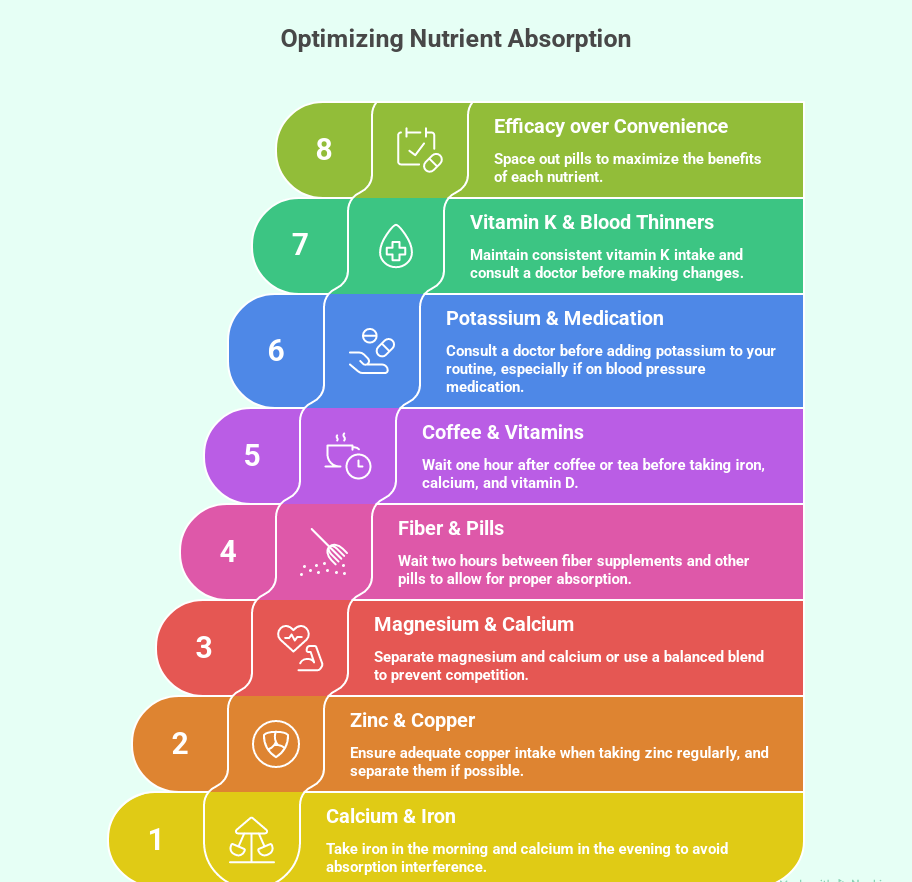
In the world of nutrition, not all nutrients get along. Understanding interactions is a vital strategy to prevent one supplement from canceling out another. Some minerals compete for the same absorption channels in your body. If you take them together, you might end up absorbing neither.
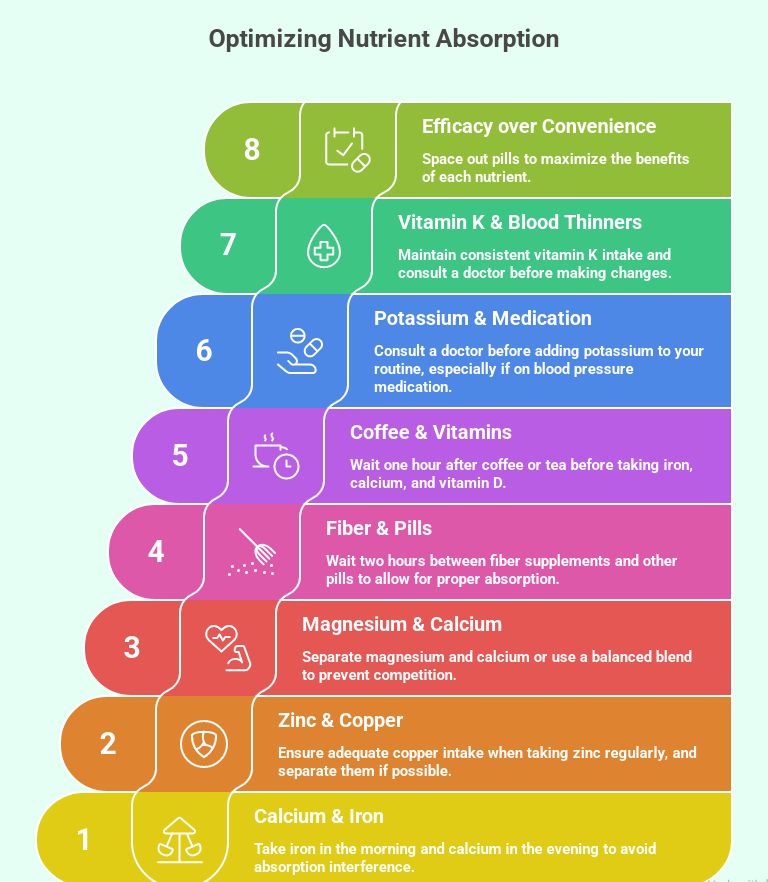
Calcium and Iron These two are arch-rivals. Calcium blocks the absorption of iron. If you need both, take iron in the morning and calcium in the evening. Never take them at the same time.
Zinc and Copper High doses of zinc can deplete the copper in your body. If you take zinc regularly, ensure you have a small amount of copper in your diet or supplement regimen, but take them at different times if possible.
Magnesium and Calcium While often sold together, massive doses of calcium can compete with magnesium. It is often better to separate them or ensure the ratio is balanced in a high-quality blend.
Fiber and Everything Fiber binds to things. If you take a massive fiber supplement, it might bind to your vitamins and carry them out of your body before they are absorbed. Wait two hours between fiber and other pills.
Vitamins and Coffee The caffeine and tannins in coffee and tea can inhibit the absorption of Iron, Calcium, and Vitamin D. Wait at least one hour after your morning brew before popping your pills.
Potassium and Medication Potassium interacts with many blood pressure medications. Always check with a doctor before adding this to your routine.
Vitamin K and Blood Thinners Vitamin K promotes clotting, which effectively works against blood-thinning medication. Consistency is key here; do not change your intake without medical advice.
Efficacy over Convenience It might be easier to swallow a handful of pills at once, but spacing them out ensures you get the full benefit of each one.
In summary, managing interactions is a sophisticated strategy for success. By separating conflicting nutrients, you maximize the efficiency of your routine. It takes a bit more planning, but the health results are worth the extra effort.
Consistency is Key
Consistency is the secret ingredient to success with vitamins. A supplement only works if you actually take it. The best time for vitamins is technically the time you remember to take them, though optimizing for biology is better. Missing doses frequently resets your progress, especially with vitamins that need to build up in your system, like Vitamin D or Iron.
Invest in a pill organizer or set alarms on your phone. These small tools remove the mental load of remembering. Keep your morning vitamins near your coffee pot and your evening vitamins on your nightstand. Visual cues are powerful triggers for habit formation. By staying consistent, you stabilize the nutrient levels in your blood, leading to noticeable health improvements over time.
Furthermore, patience is required. Unlike pain medication which works in minutes, vitamins work on a cellular level to repair and build. It may take weeks or even months to feel a difference in your energy or hair growth. Do not give up if you don't feel like a superhero after three days.
Ultimately, your commitment to a consistent schedule reflects your dedication to your health. This discipline builds a strong foundation for your body to thrive, ensuring you get the most out of your investment in supplements.
Listen to Your Body
Listening to your body is the final piece of the puzzle for success in your health journey. Every individual is different. While the general rules apply to most, you may find that B vitamins make you sleepy instead of energetic, or that Zinc upsets your stomach even with food. You must be willing to adjust your strategy based on how you feel.
Track your energy.
Monitor your sleep.
Note digestive issues.
Adjust timing as needed.
Trust your feelings.
Be patient with changes.
Consult experts often.
Remember something very important,Success with vitamins comes from trial and observation. You might face minor side effects at the start. adjusting the time or dosage usually solves this. Continued observation is true success. My advice to you is to research each vitamin before adding it to your stack.
So, do not hesitate to experiment within safe limits to find the perfect schedule for your unique biology. Remember that personalization is the key to sustainable health and a routine you can stick to forever.
Conclusion In the end, determining the best time for vitamins requires a balance between scientific knowledge and personal convenience. You must be diligent about separating conflicting minerals and ensuring fat-soluble vitamins get the food they need.
Additionally, you must treat your regimen as a long-term investment. By using tools like pill organizers, understanding the difference between morning energy and evening relaxation, and listening to your body's signals, you can build a powerful health routine. With these strategies, you will maximize absorption, minimize waste, and achieve the healthy lifestyle you are aiming for.